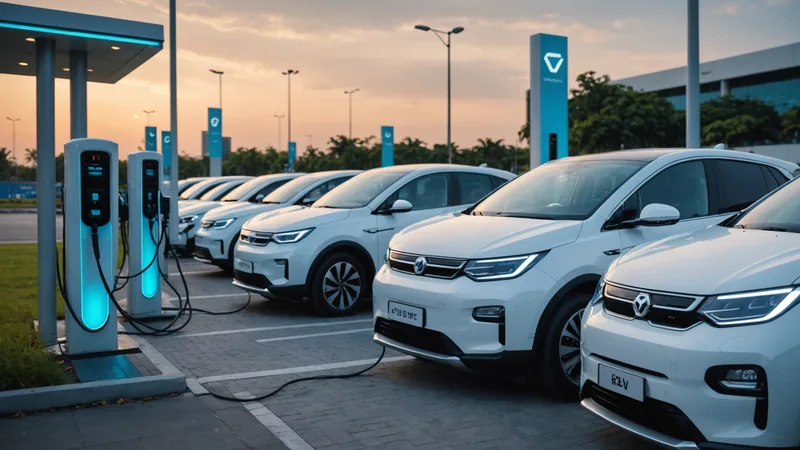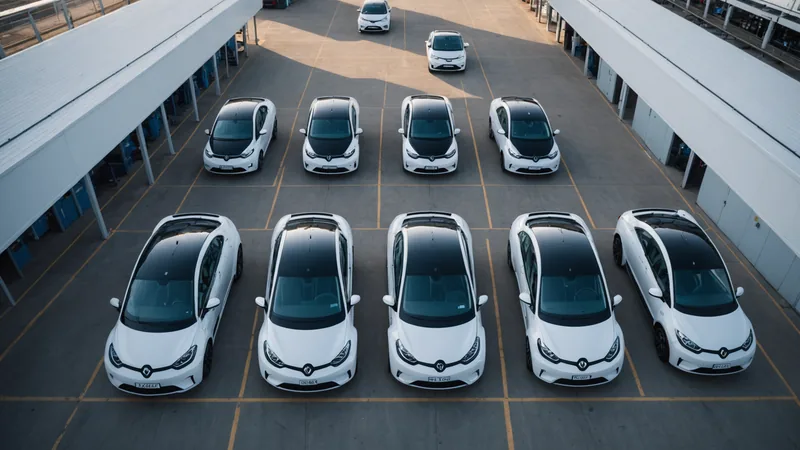
Unlike sedans and vans, micro-EVs have shorter range, faster turnaround, and often run six to eight trips daily instead of three. Early Jakarta pilots showed that these differences break common scheduling assumptions found in fleet management literature.
Why Micro-EVs Need a Different Dispatch Model
A Jakarta ride-hailing sedan rated for 400 km has enough range buffer for battery state to remain a secondary dispatch concern through most of the day. A three-wheeled electric tuk-tuk rated for 100 to 150 km, with real Jakarta urban efficiency closer to 80 to 100 km under traffic and air-conditioning loads, can lose that buffer by mid-afternoon unless charging is built into the dispatch schedule.
Duty cycles also differ substantially. A micro-EV handling last-mile delivery or short urban ride-hailing trips may complete 6 to 8 revenue-generating trips daily, compared with 2 to 4 for a sedan traveling farther. Each trip uses a larger share of the battery. A sedan model that dispatches freely by day and charges overnight does not directly fit a vehicle that may need a top-up by 13:00 to complete its afternoon shift.
The sedan dispatch model is not wrong for sedans. The issue is applying it unchanged to micro-EVs, which can cause avoidable range-outs and too much mid-day downtime.
Lessons from Early Pilots
Early pilots with small micro-EV fleets revealed three patterns that standard sedan dispatch logic handled poorly.
Opportunity charging must be a core dispatch input. Jakarta micro-EVs operate across areas with uneven charger availability. A vehicle passing a corridor with a charger can use 20 minutes to add enough energy for two more hours of service. That partial charge is marginal for sedans, but a 15 kWh pack charging at 7 kW gains about 2.3 kWh, or roughly 20 km of additional urban range. That extension matters.
To make opportunity charging useful, scheduling must know charger locations, current availability, ideally through OCPP status messages, and which vehicles can reach a charger without materially adding trip time. This creates a more involved real-time data integration challenge than overnight charging at one depot.
The time between trips sets effective dispatch frequency. Pilot data showed that micro-EVs averaging 15 minutes between trips were far more sensitive to precise dispatch timing than vehicles with a 45-minute turnaround. A sedan dispatcher may have a 30-minute decision window, while a tuk-tuk dispatcher assigning the next trip has 10 minutes before the driver sits idle. That demands lower latency from the recommendation cycle.
Recommendations taking more than 5 minutes produced meaningfully different driver idle time over a day than recommendations delivered in under 2 minutes. The gap seems minor until it is multiplied across a fleet and a month.
SOC thresholds must account for trip length. A sedan system may use one charging trigger, such as removing a vehicle from the queue below 20 percent SOC. For micro-EVs making 3 to 5 km trips in dense urban areas, 20 percent SOC on a 15 kWh pack equals 3 kWh, enough for 3 to 4 additional short trips. The same level may not cover a 12 km airport-area job. Thresholds should reflect the proposed trip, not one universal cutoff.
The Data Pipeline Challenge
Jakarta micro-EV fleets often use lower-cost telematics than sedan fleets, which affects update frequency. A sedan fleet may receive GPS and battery updates every 30 seconds, while some micro-EV hardware seen in early pilots reports every 2 to 5 minutes. A 5-minute lag is acceptable for overnight charging plans. For a vehicle completing 10-minute trips, it leaves the dispatcher using stale data for a substantial part of the service window.
This changed how we approached dispatch recommendations for micro-EV fleets. Instead of treating the latest telemetry as present truth, the model estimates current state from the last known position, elapsed time, and typical consumption for that vehicle type in its operating zone. It resembles dead reckoning more than reading a gauge, adding uncertainty that must be reflected in trip assignment confidence scores.
What Pilot Data Indicates About Economics
We frame pilot figures carefully because early-access conditions differ from steady-state deployment. With that caveat, pilot data from micro-EV operators showed that coordinated dispatch accounting for SOC, trip length, and opportunity charging windows produced measurably fewer mid-day stranding events than baseline uncoordinated dispatch. Range-outs, when a vehicle fell below the safe operating threshold during a shift, also declined in coordinated pilots compared with the same operators' pre-pilot period.
The economic effect of less stranding is direct: a stranded vehicle earns no revenue while it is recovered and recharged, and its driver waits instead of working. For a small operator with 8 to 12 vehicles, stranding two vehicles in one day represents a substantial share of potential revenue.
What We Are Refining
The main unresolved issue in micro-EV dispatch optimization is unstructured charging infrastructure. Depot charging is predictable: charger locations, capacity, and vehicle arrival times are known. Public or semi-public opportunity charging is less orderly. Availability changes, session starts depend on queue position, and some field operators use informal charging arrangements absent from any API.
The opportunity-charging layer for micro-EV dispatch is the current development focus in this part of the product. Overnight scheduling and depot coordination are well understood. The real-time opportunity layer is where the current engineering work is concentrated. We will share more when additional pilot data is available.