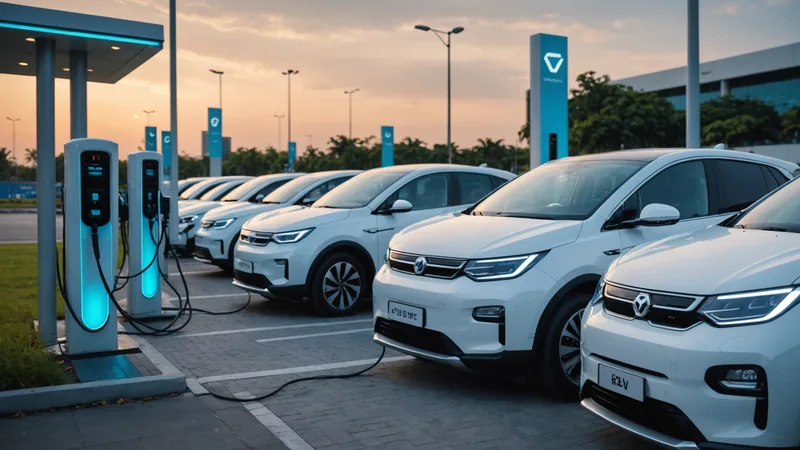
Route planning and charge scheduling depend on each other. Treating them as separate tasks gives an EV fleet a local answer that can weaken the overall operating plan.
The Coupling Issue
A charging plan that ignores tomorrow's routes can leave a vehicle short of the range needed for its first trip. A route plan that overlooks vehicle charge levels can assign a long run to a vehicle that needs an unscheduled stop to finish. In both cases, the dispatcher must make reactive fixes the system should have avoided.
This issue is most visible at the beginning of the operating day. Setting every vehicle's overnight target at 80 percent SOC, regardless of its assignment, overcharges vehicles on short urban routes and may undersupply those on longer runs. The outcome is either needless charging expense or morning dispatch scrambling when a vehicle needs more than 80 percent for its first trip.
The relationship also works in reverse. Giving the longest trip to the vehicle with the most range appears logical by itself. However, if that vehicle charges from 01:00 to 04:00, a long morning run can drain its battery early and require another charge by midday. If that session occurs during a peak tariff period, it can reduce the savings from the overnight plan.
Treating Both as One Problem
Combining routing and charging does not mean building one enormous mathematical model for every variable, although that is a valid option. A workable method coordinates the two iteratively: charging suggests SOC targets from preliminary assignments, routing revises assignments around those targets, and both repeat until the schedule satisfies both sets of constraints.
The essential exchange is straightforward but frequently absent: each vehicle's forecast SOC at the start of the day and the energy demand of its assigned trips. With those figures available, the dispatcher can identify mismatches before operations begin, including too little SOC for a route or excess SOC from unnecessary overnight charging.
At RideBlitz, the scheduling engine tracks a combined state for every vehicle, covering charge status and next trip assignment. We test the overnight plan against preliminary trips for the following day and highlight conflicts. For example, a vehicle assigned a 45 km airport job but ending the night at 60 percent SOC is flagged for dispatcher review before 07:00, rather than after operations begin.
Where to Place Charging Windows
Route efficiency depends on more than matching vehicles with destinations. It also depends on placing charging windows at the right times for vehicles working longer shifts.
Take a split shift from 06:00 to 12:00 and 16:00 to 22:00. The vehicle has four hours at midday for charging, and starting at 12:30, 14:00, or 15:30 changes its SOC when service resumes at 16:00. A 7 kW charger operating for four hours adds roughly 28 kWh, potentially restoring the vehicle regardless of the start time. If only two hours remain because a late dispatch handoff consumed the window, it adds 14 kWh, which may not cover the evening shift.
Effective midday charging requires knowing when the vehicle will actually be free. That information comes from the route plan. A trip ending at 13:45 instead of 12:30 reduces the charging window. Charging plans must account for route delays, while route plans must account for daytime charging commitments that limit vehicle availability.
PLN Tariffs and Route Costs
Jakarta's PLN time of use tariffs make some charging periods cheaper than others. Lower demand makes late night and early morning more affordable, while early evening overlaps with peak operating demand.
A vehicle working heavily from 16:00 to 22:00 uses battery during the peak tariff period and returns to the depot at 22:00 needing a recharge. Its natural off peak charging period is 22:00 to 07:00, so there is no immediate conflict. But a long morning route beginning at 07:30 can create a problem if evening traffic or air conditioning uses more energy than expected and the available overnight period cannot restore enough charge.
Routing and charging should address this together. When evening routes regularly consume substantial energy, the charging plan should allocate more of the overnight period to those vehicles instead of dividing time evenly across the fleet.
First Practical Steps
Operators using separate routing and charging tools, or manual workflows, can begin by creating a data bridge: export each vehicle's daily assignment and send it to the charging plan before overnight sessions begin. A unified optimization system is not required. The person or tool setting charge targets simply needs access to the next day's routes before 22:00.
A basic rule can already improve results: set each vehicle's target according to its longest trip tomorrow instead of applying one default to all vehicles. More advanced coordination can follow. The first essential step is recognizing that routing and charging are connected, not independent plans to create separately.